Fight Club (algemeen, posters, fan-art, quote's, stills,...)
https://www.pinterest.com/xavierspeleers/fight-club-bbv/
Consumerism & materialism
https://www.pinterest.com/xavierspeleers/consumerism-bbv/
Dissociatieve persoonlijkheids stoornis
https://www.pinterest.com/xavierspeleers/dissociative-disorder-bbv/
(als jullie pins willen toevoegen vraag gerust)
woensdag 14 oktober 2015

Besproken thema's in het boek
Dubbele/gespleten persoonlijkheid of dissociatieve persoonlijkheidsstoornis (gespleten persoonlijkheid = géén schizofrenie)
Joe (Jack in de film, of the Narrator if you please) zijn aandoening kan je waarschijnlijk linken naar zijn slapeloosheid en zijn saaie 9 to 5 job. Hij is ook heel cynisch van aard.
Iedereen kan zich hierin wel terug vinden, maar bij langdurige periodes kan dit psychose's, hallucinaties (zoals de pinguïn), illusies en allerlei andere ziektes oproepen.
"Underground" vechtsport
Tyler leerde Joe vechten om aan te tonen dat zijn overtuiging van "iedereen is kwetsbaar" vals is. Hij wilt een soort van barriere breken. Zo willen ze naar een leven streven zonder schrik en pijn.
Chaos & terrorisme
Tyler wil eigenlijk alles crashen en de maatschappij "resetten" dat zal leiden naar een gemeenschap waar iedereen voor zichzelf (of zijn familie, vrouwen kunnen volgens Tyler niet jagen) jaagt.
Ook creëert hij liever chaos dan ongehoord te blijven, hij gebruikt het dus eigenlijk om een identiteit te creëren.
Ontbreken van een vaderfiguur
Tyler en Joe hebben beiden geen vader(figuur), Tyler belt heel weinig met zijn vader en heeft verder nooit een super goede band gehad met hem. Joe zijn vader verliet hem toen ie jong was.
Mannelijkheid
Volgens Tyler ontbreekt mannelijkheid in de huidige generatie en word dit vervangen door een half afgewerkt idee dat communiceert door marketing en reclame. Hierdoor heeft iedereen een vals concept van mannelijkheid (hoge inkomsten, grote auto, groot huis, etc).
Materialisme
Joe ging vaak shoppen om een leegte in zijn leven te vullen, Tyler keurde dit sinds het begin af.
maandag 12 oktober 2015
Soap
"With enough soap, we could blow up just about anything."
'Tyler was full of useful information.'
-Tyler and the Narrator
Erika writes: When the narrator first meets Tyler, Tyler declares that he is a soap salesman, although Tyler has various other occupations including a night-time movie projectionist and a waiter. Tyler, however, most identifies himself with the job of selling soap, thus lending weight to the symbolic importance played by soap in the movie. Tyler calls soap "the foundation of civilization" and tells the narrator that "the first soap was made from the ashes of heroes". He also uses lye, a chemical ingredient of soap, to introduce the narrator to the pain of "premature enlightenment." In this role, soap is a symbol of purification and cleanliness, of a culture lacking the hypocrisy and fraudulence of contemporary culture. However, in that Tyler makes soap by stealing fat from the liposuction clinic dumpsters and then sells these soaps "to department stores for $20 a bar", soap also represents a too highly refined culture, a culture where all traces of natural humanity are suppressed, effaced, washed off. Rather than being made from the "ashes of heroes", soap is made from "selling rich women their own fat asses." The fact that Tyler is a salesman for this product represents Jack's subservience to this culture. Fight Club is founded as a way for men to regain their primitive instinct that culture tries to wash off. In that soap represents both the purifying and effacing tendencies of civilization, its symbolic function resembles that of ice in The Mosquito Coast where Allie Fox, a man obsessed with the fact that American civilization has become effete, perfects an ice machine believing ice to be the foundation of civilization.
donderdag 8 oktober 2015
cool facts Fight club (link)
http://thechive.com/2013/08/15/breaking-the-first-rule-of-fight-club-by-talking-facts-about-fight-club-35-photos/
escapism / fight club
In 1996, author Chuck Palahniuk made his publishing debut. His first novel was the darkly clever Fight Club. Quickly becoming an underground classic, Palahniuk's book offered a tale of a man whose lack of fulfillment with society led to relief through secret, underground fighting matches hosted in the basements of local bars. This Fight Club, founded with the man's friend, Tyler Durden, is a way for him and his friends to cope with their mundane lives. The psychological adventure which follows offers amazing suspense and biting commentary on life in a consumerist society.
It wasn't long before the novel found its way into the hands of a young film director by the name of David Fincher. Fincher, riding on the successes of films such as Seven and Alien3, sought to make Fight Club into a motion picture. The black humor and grim reality found on the pages of Palahniuk's novel lent themselves perfectly to Fincher's dark, gritty directorial style. Fincher sought the casting of Seven star Brad Pitt and Academy Award winner Edward Norton. Although their brilliant performances were an important element ofFight Club, the dark cerebral underworld of Palahniuk's novel is realized to its fullest through Fincher's use of color, editing, and score.
The colors in Fight Club come in two separate packages, the world of "Jack" and the world of "Tyler". In Jack's world, everything is overexposed, bright and luminescent. These artificial colors of Jack's home and professional life are the reflection of his consumerism. The greenish, halogen glow of his surroundings suggest the discomfort of his chronic insomnia and the burning dissatisfaction he feels for his everyday, young professional lifestyle. Tyler's world is the perfect contrast to Jack's. His surroundings are poorly lit, cluttered, yellowed and decaying. This contrast portrays Jack's need to escape in living vicariously through Tyler. By the time of the shocking realization that Jack and Tyler are in fact the same person, the separate palettes of their world have slowly blurred as the characters of the Jack and Tyler blur into a single personality. This grainy darkness, coupled with overexposed and oversaturated use of light and color, helps to signify the chaos in Jack's mind as he becomes more aware of the reality surrounding Tyler Durden.
This internal chaos is further enhanced by the use of editing in the film. Quick, jerky camera movments and jump cuts are used to explain the non-linear thought processes of Jack's mind. The film, like the novel, begins just momenta before the story's conclusion. From that moment we are led through a series of out-of-order flashbacks and narrations. This disorienting chain of events portrays perfectly the lack of order in Jack's mind. This confusing use of editing also helps to keep the viewer in suspense until the moment of the film's surprise twist. The sharp cuts between Tyler's dark world and Jack's overexposed reality help to effectively contrast the characters. This perfect blend of editing and color contrast help to further realize the world of Palahniuk's novel.
However, color and editing alone do not complete the film's portrayal of Fight Club. The score, which consists of original compositions by U.K. electronic outfit, The Chemical Bothers, furthers enhances the emotional aspect of the story. The score is a hodgepodge of contemporary styles ranging from drum-and-bass to avant garde electronics. This contemporary approach to the score helps bring to life the film's postmodern social commentary. The heavy percussion echoes the pounding fists of the fighting while the frenzied, rhythmic compositions push the viewer headlong into Jack's escapism and self-destruction.
This self-destruction is the ultimate theme behind Fight Club and can be summed up by Jack's narration, "I felt like putting a bullet between the eyes of every panda that wouldn't screw to save its species. I wanted to open the dump valves on oil tankers and smother all those French Beaches I'd never see. I wanted to breathe smoke . . . I felt like destroying something beautiful." David Fincher's directing brings Jack's violent world of escape and unreality to the theatre in the best way imaginable. The film stays true to the book in nearly every possible aspect. Fincher's directorial techniques are well-suited to bring about the brilliant realization of Chuck Palahniuk's amazing novel.
Works Cited
Fight Club. Dir. David Fincher. Perf. Edward Norton
and Bradd Pitt. 20th Century Fox, 1999.
Works Cited
Fight Club. Dir. David Fincher. Perf. Edward Norton
and Bradd Pitt. 20th Century Fox, 1999.
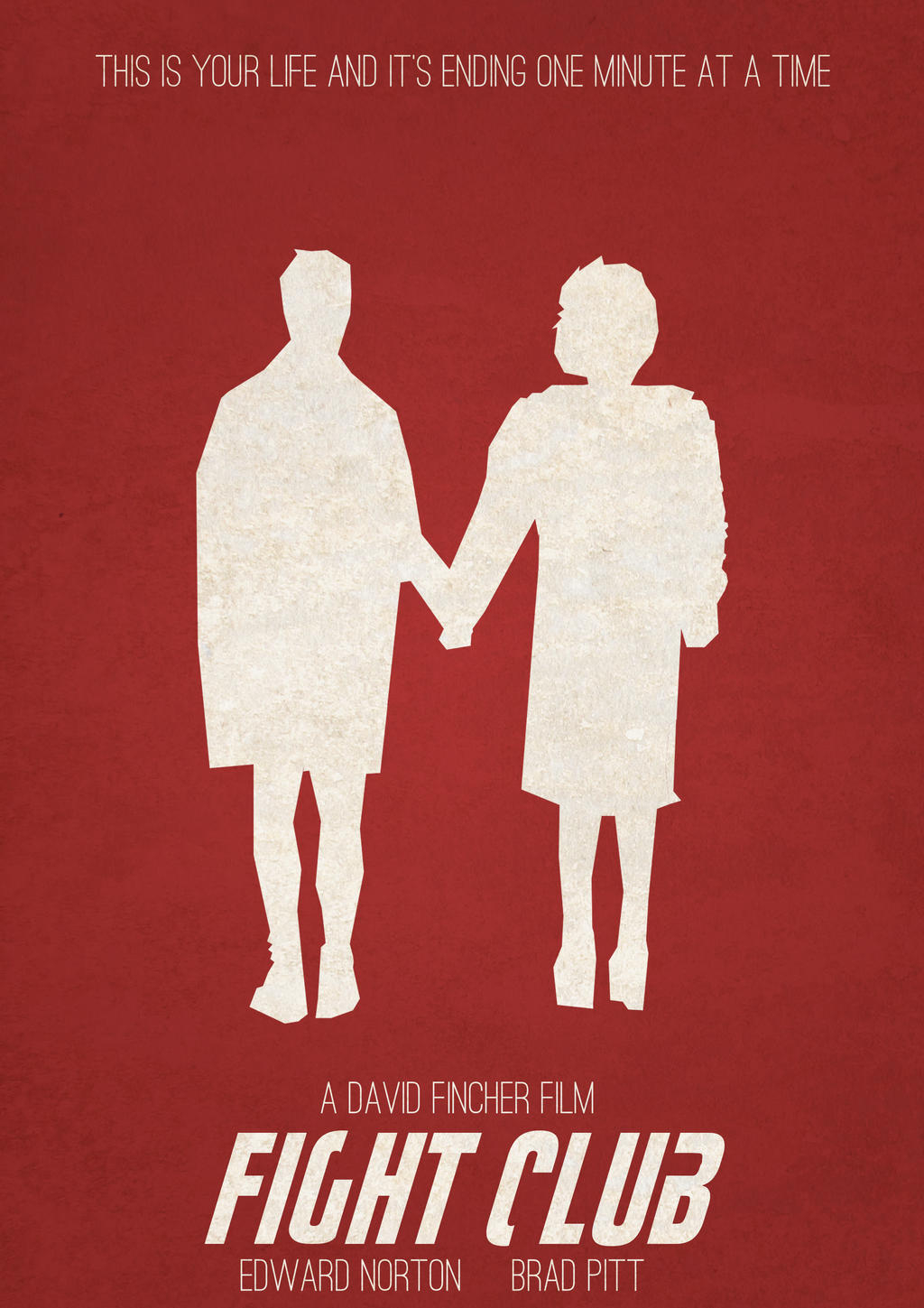
graphics & fan made works /inspiratie (update 2)


(bovenstaande poster is art van david mack denk ik!)


bovenstaande 4 fight club 2 comic


(david mack)

The Rules of Fight Club.

1st RULE: You do not talk about FIGHT CLUB.2nd RULE: You DO NOT talk about FIGHT CLUB.
3rd RULE: If someone says "stop" or goes limp, taps out the fight is over.
4th RULE: Only two guys to a fight.
5th RULE: One fight at a time.
6th RULE: No shirts, no shoes.
7th RULE: Fights will go on as long as they have to.
8th RULE: If this is your first night at FIGHT CLUB, you HAVE to fight.
The Rules of Fight Club brought to you by Digging For Fire.
Fight Club and Dissociative Identity Disorder
…
Although Fight Club utilizes DID as an important aspect in its plot development, in some regards it is inaccurate in the development of the psychological disorder. Most importantly, the narrator did not (to the extent of the viewer) undergo any form of childhood trauma. Rather, his anxiety and feelings of entrapment – spurred by the structure of modern society – caused himself to dissociate. In this sense, the movie makes a statement about the intensity of the psychological damage that is caused by such a materialistic culture.
One important parallel between Fight Club‘s DID and the real disorder is the idea that the alternate identities are present as a coping mechanism for the individual. A stronger, more confidant personality will oftentimes take over for the benefit of the individual. “I’ll bring us through this. As always. I’ll carry you – kicking and screaming – and in the end you’ll thank me,” Tyler told the narrator. In the film, since the greatest psychological abuse is the domination of consumerism, Tyler Durden must represent the narrator’s inward urge to break free from the system. While the narrator was not aware of this until the climax of the movie, Durden knew his role the whole time: “All the ways you wish you could be, that’s me. I look like you wanna look, I fuck like you wanna fuck, I am smart, capable, and most importantly, I am free in all the ways that you are not.”
Thus, the film uses DID as a hyperbole, or a metaphor – everybody has this repressed angst against the structure of modern consumerist society, even though few will go so far as to construct a separate identity to fight it. In this sense, DID did not play a negative role in the movie; rather than a disorder, it was portrayed as a saving grace. “People do it everyday, they talk to themselves… they see themselves as they’d like to be, they don’t have the courage you have, to just run with it.”
BRON: https://psychology2.wordpress.com/2010/04/30/fight-club-and-dissociative-identity-disorder/
Fight Club Personage's
http://www.gradesaver.com/fight-club-novel/study-guide/character-list
(Lijst met alle personages en wat korte informatie)


(Lijst met alle personages en wat korte informatie)
Jack / The Narrator

Eigenlijk word zijn naam nooit getoond, Marla noemt hem altijd Tyler en in de credits werd hij vernoemd naar "The Narrator". De quotes met de naam Jack ("Jack's smirking revenge..." etc) zijn Joe in het boek.
Tyler Durden
Heeft 3 jobs: voornamelijk maakt hij zelf zeep, is hij opdiener in een hotel en werkte hij in een cinema (projectionist).
Marla Singer

Marla was named after a school bully who Chuck Palahniuk knew in grade school.
She met The Narrator at a testicular cancer victims support group, which she went to despite obviously having never had that affliction. She also went to to other support groups, but for reasons other than The Narrator's. She went to the groups because they were "cheaper than a movie and there's free coffee." This caused great distress to The Narrator, who had her agree to not go to the support groups in the same days as him.
Big Bob/Robert Paulson

His name is Robert Paulson, former bodybuilder, wrestler and creator of a chest expansion program. Due to his excessive use of steroids, he got testicular cancer. As a result of the cancer he had his testicles removed, due to a hormone imbalance he later developed gynecomastia - which The Narrator refers to as "bitch tits".
Space Monkeys
(Eigenlijk de overige leden van de "club")
Angel Face
(Jared Leto in de film)
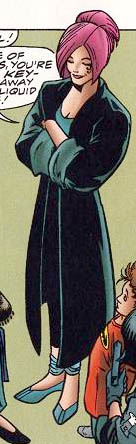
He is blond, and is described as being "beautiful." The Narrator develops a jealous hatred for Angel Face after Tyler shows favoritism. The Narrator notes his "inflamed sense of rejection," and delivers a savage beating to Angel Face causing him to be "less beautiful" from then on.
Infographic - mental illness in Fight Club

bron: http://www.topcounselingschools.org/the-psychology-of-fight-club/
Fight Club & Insomnia
http://www.theguardian.com/lifeandstyle/2014/apr/19/chuck-palahniuk-struggles-insomnia
(Schrijver over slapeloosheid en het boek)
http://www.shmoop.com/fight-club/insomnia-symbol.html
"The movie starts out with the protagonist’s story of insomnia and getting over insomnia."
https://startyourfight.wordpress.com/2013/01/07/interpreting-fight-club/
(Schrijver over slapeloosheid en het boek)
http://www.shmoop.com/fight-club/insomnia-symbol.html
"The movie starts out with the protagonist’s story of insomnia and getting over insomnia."
https://startyourfight.wordpress.com/2013/01/07/interpreting-fight-club/


Fight Club 2 - Graphic Novel - 1e 6 pagina's
Link:
http://www.slashgear.com/fight-club-2-first-6-pages-of-graphic-novel-now-available-19369767/
http://www.slashgear.com/fight-club-2-first-6-pages-of-graphic-novel-now-available-19369767/
BOEK PDF FIGHT CLUB - Chuck Palahniuk (lauri saunders)
http://english227fightclub.weebly.com/uploads/6/7/4/7/6747209/fight_club_-_chuck_palahniuk.pdf
Alles Rond Fight Club
Alles rond Fight Club
Dit is een link met allerlei afbeelding rond Fight Club die ik op pinterest heb gezet.
Dit is een link met allerlei afbeelding rond Fight Club die ik op pinterest heb gezet.


Abonneren op:
Reacties (Atom)